

An alkaline filter and a remineralization filter both install inline after a reverse osmosis system, and both raise the pH of RO water — but they do it to very different degrees and for very different reasons. An alkaline filter is a basic cartridge that adds a small amount of alkalizing minerals to adjust pH. A remineralization filter restores a broad spectrum of minerals — calcium, magnesium, and dozens of trace elements — with the pH increase arriving as a natural byproduct.
If you own a reverse osmosis system, you've probably noticed the water tastes flat, or you've read that RO strips minerals along with contaminants. Both are true, and both filters exist to fix it. The question is how completely you want it fixed.
The GoodFor Company is a consultation-first water filtration company in Carlsbad, California. We match homeowners to certified filtration systems based on their water data, and we carry both filter types discussed in this guide — a standard alkaline filter and our own Sango Coral remineralization filter — as part of our clean drinking water lineup. This guide explains what each one actually does, so you can decide which your system needs.
What's the Difference Between an Alkaline Filter and a Remineralization Filter?
The difference between an alkaline filter and a remineralization filter is scope: an alkaline filter adjusts pH using a small dose of basic alkalizing minerals, while a remineralization filter restores a complete mineral profile — and raises pH as a consequence. Think of it as the difference between seasoning water and rebuilding it.
Swipe to compare →
| Alkaline Filter | Remineralization Filter (Sango Coral) | |
|---|---|---|
| Primary job | Raise pH | Restore the full mineral profile |
| How pH rises | Alkalizing minerals dissolve into the water | Byproduct of 70+ minerals dissolving naturally |
| Mineral spectrum | A few basic alkalizing minerals | 70+ trace minerals incl. calcium, magnesium, potassium, silicon |
| Mineral source | Standard mineral media | Fossilized Okinawan Sango coral — 340g, single named source |
| Ca:Mg ratio | Not controlled | Natural 2:1 calcium-to-magnesium ratio |
| Cartridge life | ~6–12 months (typical for the category) | Approximately 24 months |
| Price | $39 | $289 |
| Cost per month of service | ~$3–7/month | ~$12/month |
| Install | Inline, 1/4" push-fit, any RO system | Inline, 1/4" or 3/8" John Guest push-fit, any RO system |
| Best for | "I want my RO water mildly alkaline" | "I want the minerals back, not the pH number" |
What an Alkaline Filter Does (and Doesn't Do)
An alkaline filter for a reverse osmosis system is an inline cartridge that raises the pH of RO water from its naturally acidic post-membrane state — typically 6.0 to 7.0 — into the mildly alkaline range. It does this by passing water over basic alkalizing mineral media, which dissolves slowly into the water stream.
What it does well: it's inexpensive, it installs in minutes on any RO line, and it reliably moves pH above neutral. For a lot of people, that's the entire goal — they've read that RO water is slightly acidic, they want it corrected, and a $39 cartridge corrects it.
What it doesn't do: restore the mineral profile RO removed. The mineral dose in a standard alkaline cartridge is small and narrow — enough to shift pH, not enough to meaningfully rebuild what the membrane took out. The water reads alkaline on a test strip, but its mineral content is still a fraction of what spring water carries.
Key Takeaway
An alkaline filter is a pH tool. If pH is your only goal, it's the right tool — and the inexpensive one.
What a Remineralization Filter Does
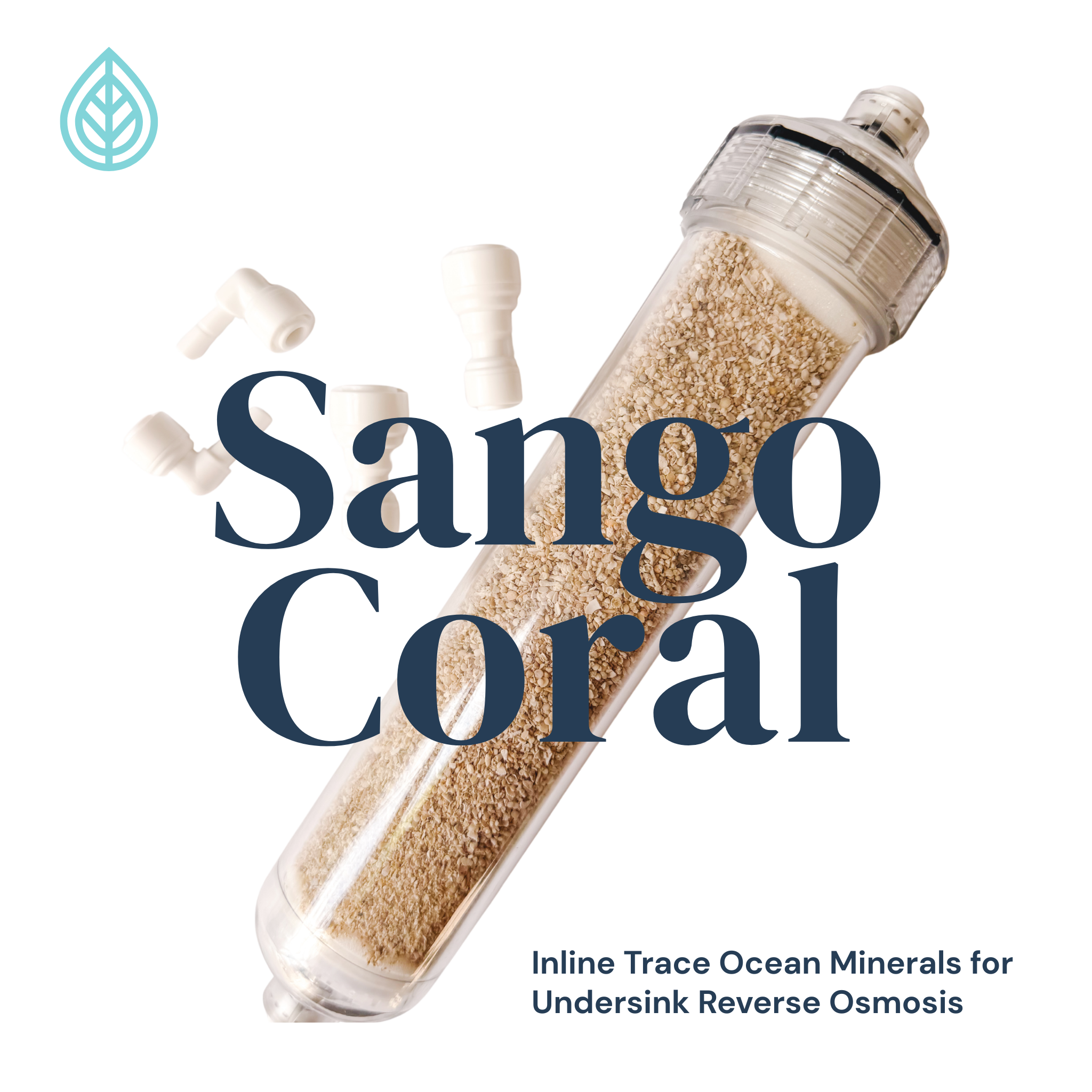
A remineralization filter is an inline cartridge that adds a broad spectrum of minerals back into reverse osmosis water — and the GoodFor Sango Coral is our answer to that category. It contains 340 grams of fossilized Sango coral collected from sustainable seabeds near Okinawa, Japan, ground to an ultra-fine 8 μm particle size, and it releases 70+ trace minerals into the water in ionic form as water passes through.

Three details separate a serious remineralization cartridge from a basic alkaline one:
The mineral spectrum. Calcium and magnesium are the headliners, but Sango coral carries the long tail — potassium, silicon, chromium, sulfur, iodine, and dozens of trace elements present in the coral's original marine mineral matrix.
The ratio. Sango coral naturally holds calcium and magnesium at a 2:1 ratio. That ratio isn't added by us — it's the composition of the coral itself, which is part of why we chose this media over blended synthetic alternatives.
The pH mechanism. Sango-filtered water is naturally alkaline, but not because anything synthetic pushes it there. The pH rises the same way it does in a mineral spring: dissolved minerals raise it. With a remineralization filter, alkaline water is the result, not the trick.
Boris Jabotinsky · Co-Founder, Licensed Master Plumber, CSLB #1102129
When a customer asks me for an alkaline filter, my first question is why. If the answer is 'I want the pH up,' the $39 cartridge does that. If the answer is anything about minerals, taste, or what RO took out — that's not a pH problem, that's a remineralization problem, and a pH cartridge won't solve it.
Why Reverse Osmosis Water Needs One of These Filters
Reverse osmosis removes roughly everything dissolved in water — contaminants and minerals alike — because the membrane's 0.0001-micron pores can't tell the difference between lead and calcium. That's not a flaw; it's the reason RO is the most effective home purification method available. But it leaves the water mineral-empty and mildly acidic, which is why it tastes flat compared to spring water.
We cover the full picture — what RO removes, what that means, and every way to add minerals back — in our companion guide on how to remineralize reverse osmosis water. The short version: drops and mineral salts work but demand daily effort and discipline; inline cartridges do the job automatically, on every glass, for years.
The flat taste is usually what sends people searching. Minerals are what your tongue registers as "spring water." Take them out and water tastes hollow; put them back and it tastes the way water is supposed to.
Which Filter Do You Need? A Simple Decision Guide
Choose based on your actual goal, not the category name — because "alkaline filter" is what most people search, but remineralization is what many of them mean.
The $39 alkaline filter is enough if:
- Your only goal is moving pH above neutral
- You're testing whether you notice a difference before committing further
- You're outfitting a secondary system — an office RO, a rental, a garage fridge line
We mean that honestly. If pH adjustment is the whole job, the standard cartridge does the whole job, and we'd rather you buy the right $39 filter than the wrong $289 one.
The Sango Coral is the right choice if:
- You want the minerals back — not a pH reading, the actual mineral profile
- Taste is a primary driver (mineral spectrum is what changes taste, not pH alone)
- You want a named, single-source media rather than a generic mineral blend
- You'd rather change a cartridge every two years than every year
And if you're building a drinking water setup from scratch rather than upgrading an existing RO, the conversation is bigger than one cartridge — that's what our under-sink reverse osmosis lineup and alkaline & remineralization collection are for.
Cost Comparison: Sticker Price vs. Cost Per Month
The honest way to compare filter cost is per month of service, not per cartridge. Sticker price tells you what you pay today; cartridge life tells you what the water actually costs. Here's the math over a 24-month window:

Alkaline Filter
pH adjustment only
Sango Coral Remineralization
70+ minerals, full profile
Both columns assume typical household drinking-water usage; cartridge life varies with volume. Sango replacement cartridges are available on Subscribe & Save, which brings the per-month figure down further.
That's the real spread: a few dollars a month between basic pH adjustment and full-spectrum remineralization — about the price of one bottle of mineral water covering an entire month of it from your tap. And one number in that breakdown is doing quiet work: one cartridge per two years. Most remineralization cartridges in the broader category need replacement every 9–12 months; Sango's 340-gram media load is what stretches its service life to roughly double the category norm, which is also two fewer under-sink visits you'll make.
What This Means for Your RO System
Both filters install the same way: inline on the RO output line, after the tank, before the faucet, using John Guest push-fit connections — no tools beyond scissors for the tubing, and no plumber required for most installs. The Sango Coral ships in both 1/4" and 3/8" fittings, so it fits any under-sink RO line regardless of brand. One step worth taking first: if your RO system is more than a year old or overdue for filter changes, sanitize it before adding any mineral filter. Mineral media does its job best on clean water — biofilm or sediment from an unmaintained upstream system can foul any cartridge you put after it.
If you already own an RO system — ours or anyone's — either cartridge works with it. Start from your goal: pH only, take the $39 alkaline filter. The full mineral profile, take the Sango Coral. Still weighing it? The alkaline & remineralization collection lays both options side by side — or ask our AI Water Concierge on any page of the site and get an answer in seconds.
Know your goal. Pick your filter.
pH adjustment for $39, or the full mineral profile restored for about 40¢ a day. Either way, your RO water stops tasting flat.
Still deciding? Ask the AI Water Concierge — instant answers, right here on the site.